
How to choose a Denver neighborhood that fits your life
Fourteen areas across the city and close-in suburbs, compared on the things that shape your days: walking, transit, yards, noise and how fast you can reach a trailhead.
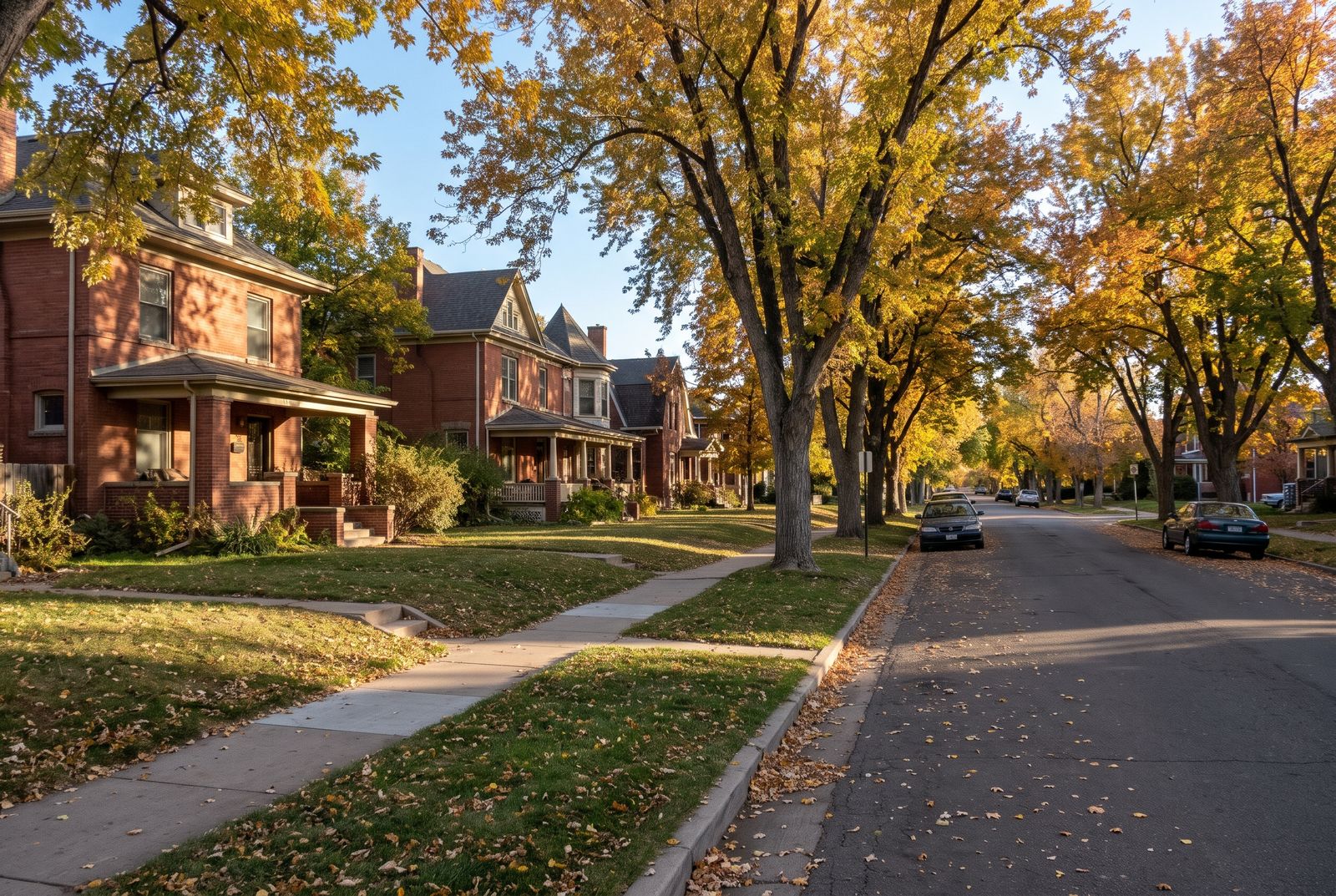
Choosing where to live in Denver is mostly about trade-offs between three things: how you get around, how much space you want, and how close you need to be to the mountains. Get those right and almost any neighborhood works. Get them wrong and even a beautiful one gets old fast.
Understand how the metro is laid out
Downtown sits near the confluence of the South Platte River and Cherry Creek, with Union Station as its transit hub. Older neighborhoods ring it in every direction, built mostly in the late 1800s and early 1900s: brick homes, Denver squares, bungalows and Victorian cottages. Farther out, postwar ranch houses give way to newer subdivisions, especially to the south, east and north.
The foothills rise to the west. Everything from Golden to Littleton sits on that edge, which shortens the drive to trails and mountain highways. The plains run east, toward Aurora and Denver International Airport. That simple geography explains a lot about where people choose to live.
Locals often describe location by highway: "west of I-25", "inside C-470", "off Sixth Avenue". Street numbering helps too. Broadway divides east from west addresses, and Ellsworth Avenue divides north from south. Learn those two and Denver addresses start making sense.
Neighborhood finder
Pick what matters. Areas that match more of your choices rise to the top.
-
Capitol Hill
Central DenverDense blocks of older apartment buildings and grand mansions, many split into units, just east of downtown. East Colfax Avenue runs along one edge with bars, music venues and late-night food.
-
Highland and LoHi
Northwest of downtownVictorian homes and bungalows mixed with newer townhomes, across I-25 from downtown. Pedestrian bridges link Lower Highland to the Platte River trails and Union Station area.
-
Washington Park
South-central DenverBungalows and remodeled older homes around one of the city's most-used parks, with lakes, flower gardens and a busy running loop. South Pearl Street and Old South Gaylord add small shopping strips.
-
RiNo (River North)
North of downtownA former industrial district known for murals, breweries, food halls and new apartment buildings. The A Line's 38th and Blake station connects to Union Station and the airport.
-
Baker
South of downtownVictorian cottages and brick homes along and behind South Broadway, which carries vintage shops, bars and live music. Light rail stations sit on its western edge.
-
Park Hill
East DenverLarge older homes on tree-lined streets and wide parkways, close to City Park and the Denver Zoo. Mostly residential, with small commercial pockets.
-
Central Park
Northeast DenverA planned community built on the site of Denver's old Stapleton airport, with newer homes, many parks and pools, and an A Line station.
-
Sloan's Lake
West DenverHomes and new condos around a large lake with open views west to the mountains. The paths around the water are popular for walking, running and paddleboarding in summer.
-
Cherry Creek
Central-east DenverAn upscale shopping and dining district with condos, townhomes and nearby single-family streets. The Cherry Creek Trail runs along the creek toward downtown.
-
Lakewood
West suburbA large suburb stretching west to the foothills, with access to Red Rocks and Bear Creek Lake Park. The W Line light rail runs along its northern edge toward Golden.
-
Golden
Foothills city west of DenverA small city tucked against the foothills, home to the Colorado School of Mines and a walkable historic downtown along Clear Creek. Trailheads start close to town.
-
Arvada
Northwest suburbA large suburb with a historic Olde Town district and a commuter rail station on the G Line. Neighborhoods range from older ranch homes to newer subdivisions toward the foothills.
-
Aurora
East suburbOne of the largest cities in the metro, with a wide mix of housing, cultures and price points. The R Line serves parts of the city, and the eastern edge sits close to the airport.
-
Littleton
South suburbHistoric downtown Littleton has a main street feel, with light rail nearby. Trails along the South Platte River and parks such as Chatfield State Park sit to the south and west.
Weigh the trade-offs people underestimate
Parking versus walkability
The most walkable parts of central Denver were built before cars. That means narrow lots, alley garages if you are lucky, and permit or time-limited street parking near busy corridors. If you own two cars, ask exactly where both will sleep on a snowy night.
Old houses versus new ones
Historic neighborhoods have the trees, porches and character. They also have older plumbing and wiring, small closets, and often no central air conditioning. Newer construction in places like Central Park or the outer suburbs trades some character for insulation, garages and modern systems.
| Factor | Older central areas | Newer suburban areas |
|---|---|---|
| Getting around | Walk, bike, bus, some rail | Mostly by car, some rail stations |
| Parking | Street or alley, often tight | Attached garages are common |
| Housing | Victorian, bungalow, Denver square, older apartments | Townhomes, detached homes, newer apartments |
| Air conditioning | Often missing or added later | Usually central air |
| Trees and shade | Mature canopy | Younger trees, more sun |
| HOAs | Rare for houses | Common; read the rules and fees |
Commute direction
Two homes the same distance from work can have very different commutes. Southbound I-25 out of downtown in the evening, and the stretches of C-470 and I-70 that feed the west side, get heavy at rush hour. A reverse commute, living downtown and working in a suburb, is often easier.
Test a street before you commit
- Drive or ride your commute at rush hour, both directions.
- Check the nearest rail station or frequent bus route on RTD's current map.
- Look up the property on your city's or county's online property records to see the year it was built.
- Ask about radon testing, hail damage history and how the roof was last replaced.
- Find out who handles snow removal on the sidewalk and in shared driveways.
- If it is a condo or HOA community, read the rules about parking, pets and short-term rentals.
Match the area to the weekend
- your weekends are trailheads and ski lifts
- favor the west side: Lakewood, Golden, Arvada or Sloan's Lake.
- your weekends are restaurants and shows
- favor Capitol Hill, Highland, Baker or RiNo, and accept tighter parking.
- your weekends are soccer games and yard work
- look at Park Hill, Central Park, Littleton or Arvada.
Once you have a shortlist, our moving guide walks through the paperwork and timing, and the day trips guide shows how each side of town connects to the mountains.
The bottom line
- Choose by daily routine first, weekend second, aesthetics third.
- West side shortens trips to the foothills; central areas shorten trips to dinner.
- Visit twice, at night and at rush hour, before signing anything.
Neighborhood questions
What is the best neighborhood in Denver for newcomers?
There isn't one. People who want to walk to restaurants and do not mind older buildings and tight parking tend to like Capitol Hill, Baker or the Highlands. People who want a yard and a quieter street tend to look at Park Hill, Washington Park or Central Park. Start from how you spend a normal Tuesday, then use the finder on this page.
Is it better to live in Denver proper or a suburb?
It depends on your commute and your weekends. The city puts more within walking and biking distance. Suburbs such as Lakewood, Arvada and Golden sit closer to the foothills, while Aurora and the southern suburbs offer more newer housing. Commute direction matters more than the city line.
Which Denver neighborhoods have light rail?
RTD rail lines run through or near Union Station downtown, along the I-25 corridor to the south, west through Lakewood toward Golden, north through Arvada, east through Aurora, and out to the airport on the A Line. Check the current RTD map for station locations, since walking distance to a station matters more than the neighborhood name.
How do I check whether a street is noisy?
Visit at night and on a weekend. Look for nearby bars, rail lines, flight paths and highways. In nightlife districts like LoDo and parts of RiNo and Colfax, noise on weekend nights can be very different from a weekday afternoon visit.
Are there neighborhoods with mountain views?
Many. Sloan's Lake, the Highlands and parts of the west side are known for views west, and higher floors of downtown and Capitol Hill buildings often look toward the mountains. Views from street level depend on trees and nearby buildings, so check the specific unit.
No question matches that. Ask it instead.
Torn between two neighborhoods?
Send us both names, your commute and what you do on weekends. We will reply with the differences that matter most for you.
Compare my options